
A Korea LASIK recovery program isn't a standard medical term. For laser vision correction, plan on a typical stay of about 3-5 days with a next-day check-up, and arrange follow-up at home before you leave.
Searching for a Korea LASIK recovery program because you're worried about who looks after your eyes once you've flown home?
Read this before you book the return flight.
You'll know what decides the cost, which review claims hold up, how the methods change your days, and what to arrange for follow-up at home, so you can pick a trip length that fits your eyes and your budget.
Hello, I'm Dr. Baek Dong-won, Representative Director at EYEONCE Eye Clinic in Seoul, a former Clinical Instructor in ophthalmology at Samsung Seoul Hospital.
I evaluate you, I operate, and I follow your recovery, so you aren't handed off to someone you've never met. We have in-house interpreters on-site in English, Chinese, Mongolian and Thai, and our Lifetime Aftercare continues after you leave Korea.
I wrote this because people often compare the name of a package and forget to ask who they'd contact on day ten at home.
"Recovery program" isn't a standard medical term. What you need is a stay long enough for the exam, surgery and next-day check, which is typically about 3-5 days for laser vision correction, plus a follow-up plan for home.
If you're still working out your dates, send your latest prescription and travel window on WhatsApp, along with the one thing worrying you most. I review it personally before you book a flight.
Ignore the label and check the parts. These are the questions I'd want you to put to any clinic, including mine:
That last one comes from the US CDC, whose medical tourism guidance tells travelers to get copies of all their records before returning home. A doctor who has never met you needs them. For a wider look at choosing a clinic, I've covered what to check first for LASIK in Korea separately.
Contact lenses reshape the cornea, so measurements need a break from them. Stop soft lenses at least 5-7 days before your exam, hard or RGP lenses at least 3 weeks before, and ortho-k lenses at least 1 month before.
Then look at our hours, because they shape the trip more than people expect. We're open Monday, Tuesday, Thursday and Friday 09:00-18:00 and Saturday 09:00-16:00, with lunch 13:00-14:00. We're closed Wednesdays and Sundays. Appointments are required, and registration may close early.
Exam and surgery can often be done the same day, for suitable candidates. Count forward one day from any possible surgery date: after a Tuesday or a Saturday, the next day is a closed day. If your dates fall that way, ask how the next-day check would work before you fix your flights.
Say you have soft contacts, a mild prescription and a few days off. You land Thursday night and arrange your own way in from Incheon; our directions cover taxi, AREX plus subway, and limousine. Friday is your exam and, if the results support it, surgery, so arrange transport or a companion for that day. Saturday can be your next-day check. We're closed Sunday and open again Monday, so a flight on Monday evening leaves you one more working day in Seoul. That's four nights, inside the usual range.
Send us your travel dates on WhatsApp and we'll build the schedule around you. Keep your drops and artificial tears in your carry-on, since cabin air is dry and many eyes feel it early on.
The first thing I'd want to know about your trip is when you last wore contacts. A cornea still shaped by lenses can give misleading numbers, and every safe outcome starts with measurement. We only proceed if your exam confirms you're a safe candidate, so if you can't stop your lenses in time, move the trip. I'd also keep your flights changeable, because the exam may point to a different procedure, or to none.
The method changes your first week more than it changes your stay. All three below usually fit the 3-5 day range, but the days feel different.
| Method | How it works | Early recovery |
|---|---|---|
| LASIK | Flap cut with the Ziemer FEMTO Z8, cornea reshaped with the WaveLight EX500 | Vision often improves within hours; light activity for most the next day |
| LASEK | Surface reshaped with the WaveLight EX500, no flap, bandage contact lens | Mild discomfort and light sensitivity at first; improves through week one; stabilizes by months 1-3 |
| SMILE LASIK / SMILE PRO | Flapless, through a 2-4 mm keyhole incision | Most see clearly enough for daily life by next morning; some fluctuation in months 1-3 |
LASEK is the one that deserves the most thought on a short trip, since you may be flying during the light-sensitive days. Ask when the bandage lens comes out before you fix the return date. My guide on who LASEK suits goes further, and the daily-life timeline after SMILE LASIK covers work and exercise.
I don't choose by which recovery sounds easiest. LASEK trades a slower start for no flap; LASIK recovers faster but does involve a flap, so it needs a healthy, suitably thick cornea.
Three claims come up again and again in review threads about LASIK abroad.
"I could see the next morning." Often true, and our own SMILE and LASIK pages say most people see well early. What it leaves out is the later unevenness: the FDA says vision can take three to six months to stabilize, and difficulty driving at night may last during that time.
"You can do it all on a long weekend." True for some eyes on some calendars. It falls apart when the exam changes the plan or the next day is a closed day.
"Once you've had the check-up, you're done." This one is wrong. The next-day check is only the first of the visits you should expect.
The FDA advises seeing your doctor within the first 24 to 48 hours after surgery, then at regular intervals for at least the first six months. A trip to Seoul covers only the start of that, so most of those visits happen near your home. Find a local ophthalmologist before you leave, and ask whether they'll see someone who had surgery abroad. The CDC also warns that follow-up care for complications may not be covered by your insurance, so check your policy now.
At home, keep the rules going: don't rub your eyes, avoid swimming, saunas and steam rooms for about a month and eye makeup for around two weeks, and wear sunglasses outdoors. Avoid screens as much as you can in the early period, and use your prescribed drops as directed.
If you feel a foreign-body sensation or pain, come to us right away, or see a local ophthalmologist first and then contact us. If something seems wrong at any point, contact us. Through a detailed re-examination we'll look for the cause and, where appropriate, help arrange re-treatment under Lifetime Aftercare. The specific conditions are something to confirm during your consultation.
Before you commit, tell us on WhatsApp which city you live in, and ask what your follow-up would look like from there.
I can't give you a figure here, because it turns on things specific to you:
For the number itself, message us on WhatsApp with your prescription and ask for a personalized quote for your case.
Early on, many people have dry or scratchy eyes, temporary blur, and haziness or halos at night. These usually settle over the first months, though how far and how fast varies from person to person.
Some people should wait or skip surgery. The FDA's list of who LASIK may not suit includes people whose prescription is still changing, people who are pregnant or nursing, and people in contact sports. Corneas that are thin for the correction also call for a different conversation, which may lead to LASEK or a lens option such as ICL. ICL is intraocular surgery with its own risks, and we usually recommend 5-7 days in Seoul for it.
After you fly home, don't wait for a scheduled visit if you have severe pain, or if your vision or other symptoms get worse instead of better. The FDA says to contact your doctor immediately. In practice, that means seeing someone near you first, then messaging us.
Results and suitability vary by individual. Your procedure recommendation is confirmed only through an in-person diagnostic exam.
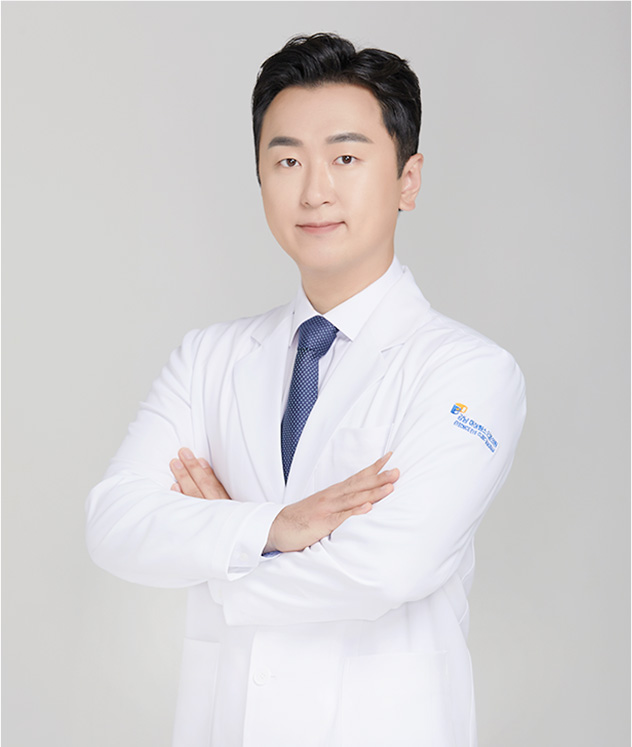
Representative Director · Former Clinical Instructor, Dept. of Ophthalmology, Samsung Seoul Hospital · Member, Korean Society of Cataract and Refractive Surgery · Member, American Society of Cataract and Refractive Surgery
International patients share what actually happened — from their first fears to waking up the next morning without glasses.
Our patients share their stories on Google — verified, public and unfiltered. Open the map to read every review straight from the source.
Tell us your prescription and travel dates. Our English-speaking team will design your personalized plan — free of charge, no pressure.
An English-speaking eye clinic in the heart of Gangnam, Seoul — moments from Sinnonhyeon Station and easily reached from Incheon International Airport.
5–6F, Duo Sinnonhyeon, 368 Sapyeong-daero, Seocho-gu, Seoul, South Korea
+82-10-6308-0984 — English, Chinese, Mongolian & Thai
Mon, Tue, Thu, Fri 09:00–18:00 · Sat 09:00–16:00 · Lunch break 13:00–14:00 · Closed Wed & Sun
By appointment only · Registration may close early depending on the day’s schedule.
Sinnonhyeon Station (Line 9 / Sinbundang Line) — 3 min walk. Gangnam Station (Line 2) nearby.