
Recovery spending around LASIK in Korea comes from the method your cornea allows, about 3–5 days in Seoul, time off work and follow-up care at home. Ask on WhatsApp what it would cost for your case.
What does Korea LASIK recovery cost beyond the surgery itself?
Methods: how LASIK, LASEK and SMILE LASIK change the recovery budget
How many nights in Seoul should you pay for?
What do reviews get right about LASIK recovery?
Past 40: the cost that arrives later
What happens to the cost if something goes wrong after you fly home?
What to send when you're ready to price your trip
Worried that the Korea LASIK recovery cost will grow well past the surgery quote once you add hotel nights, lost work days and care after you fly home?
Read this before you book the return flight.
You'll know what decides that cost, how each method changes your days, what reviews get right and wrong about recovery, and how to plan a trip that fits your eyes and your budget.
Hello, I'm Dr. Baek Dong-won, Representative Director of EYEONCE Eye Clinic in Seoul.
I evaluate you, operate on you and follow your recovery myself. We have in-house interpreters for English, Chinese, Mongolian and Thai, and lifetime aftercare that continues once you're home.
I wrote this because people tend to compare surgery quotes line by line and then guess at everything around them.
The recovery side comes down to the method your cornea allows, your nights in Seoul (about 3–5 days is typical for laser correction here), your days off work, and your eye care back home.
If the return date is your main worry, send your latest prescription and your possible travel dates on WhatsApp, and ask what the whole plan would cost for your case.
Five things move it: your method, your nights in Seoul, your time off work, the supplies and rules of the first month, and your eye care at home. The operation's side of the number is covered in my piece on what changes LASIK cost in Korea. This section is about everything around it.
Method comes first because it shapes the other four. The same prescription can mean a different leave request if your cornea points you toward LASEK.
Nights in Seoul are the line you control most. Surgery day also needs transport or a companion, and a companion brings a second flight and possibly a second room. From Incheon Airport, your options are a taxi, AREX plus the subway, or a limousine bus.
Time off work is easy to leave out. The FDA's LASIK guidance says to plan on a few days off until light sensitivity and glare subside. Our aftercare advice is to avoid screens as much as possible for 1–3 months, which matters if your job is ten hours at a monitor.
The first month has its own small costs: prescribed drops, artificial tears and sunglasses. Ask whether the drops are part of your quote. Pools, saunas and steam rooms are off for about a month, so a beach stop on the way home doesn't belong in the plan.
Home care is the line most often missing. The FDA describes regular visits for at least the first six months, and after the early check-ups in Seoul, those visits would likely be with an eye doctor near you. Call that office and ask their fee for a post-surgery check, then ask on WhatsApp what the Seoul side would cost for your case.
A faster method only saves you days if your eyes can safely have it. Here's how the three compare on early recovery.
| Method | Early recovery | Often suited to |
|---|---|---|
| LASIK | Improved vision typically within hours; most people resume light activity the next day | Healthy corneas of suitable thickness |
| LASEK | Mild discomfort and light sensitivity in the first days, gradual improvement through week one, stable by month one to three | Thinner corneas, contact-sport lifestyles |
| SMILE LASIK | Most people see clearly by the next morning | Active lifestyles; no flap, a 2–4 mm keyhole incision |
All three are laser procedures here. LASIK and LASEK reshape the cornea with the WaveLight EX500, and the Ziemer FEMTO Z8 cuts the LASIK flap and performs SMILE LASIK. If you want the detail on the flapless option, I've written about what makes SMILE LASIK different.
The number I care about here is corneal thickness measured against the amount of correction you need. The FDA lists thin corneas among the conditions that call for caution with LASIK, warning of blinding complications. When the cornea is thin for the correction, LASEK's slower healing is the trade you accept, because surface treatment leaves no flap. Its own main downside is those uncomfortable first days and a protective bandage contact lens.
We only go ahead when your pre-op exam confirms you're a safe candidate, so keep room in your budget for the trip where the answer changes your plan. I'd rather you hear that here than in the exam room. It's also why I personally review a prescription or records before you book a flight, and why I'll explain my reasoning whichever method the measurements point to.
About 3–5 days is typical for laser correction here. Exam and surgery can often happen the same day, with a check-up the next day before you fly home. Our calendar then shapes your hotel bill more than people expect.
We're closed on Wednesdays and Sundays, and Saturday hours end at 16:00. Surgery on a Monday, Thursday or Friday leaves an open clinic the next morning. Surgery on a Tuesday or Saturday doesn't, so ask how the check-up would work before you pay for those dates.
Say you're 44, in soft contacts, with one week of leave. You'd switch to glasses 5–7 days before the exam, since lenses reshape the cornea and skew the measurements. You could land Wednesday evening, have your exam Thursday, and have surgery that day if you're suitable. Friday is the check-up, Saturday is rest, and Sunday you fly. I'd keep Monday off work too.
If the exam points to LASEK, I'd plan for the five-day end of that range and more leave at home, since light sensitivity lasts through those first days. Ask when the bandage lens comes out before you fix your flight. Hard lenses need a break of at least 3 weeks and ortho-k at least 1 month, so those wearers should start counting earlier. My checklist for LASIK in Korea covers the rest of the planning.
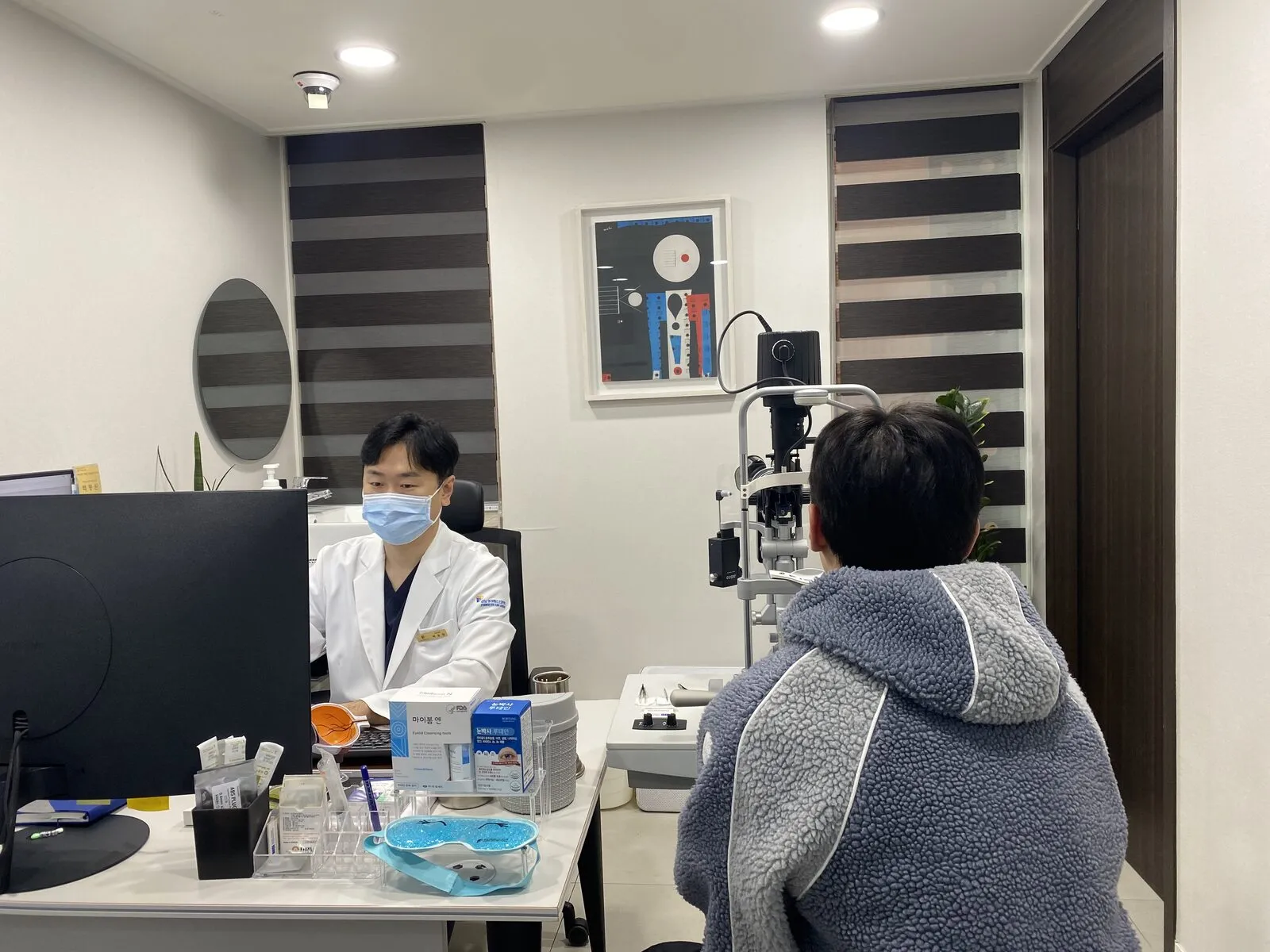
Reviews usually get the first morning right and the following months wrong. Three claims come up often in public threads, and each deserves a closer look.
"I could see the next morning." Often true for LASIK and SMILE LASIK, though less so for LASEK. Vision keeps changing after that: the FDA says it may take up to three to six months to stabilize, and some fluctuation or haze in that period is common.
"I was back at work the next day." Light activity the next day is common. A full day of screens is a different matter, which is why the leave budget above runs longer. For the SMILE timeline, see my piece on when daily life returns after SMILE LASIK.
"Once you're home, there's nothing left to pay." This one fails most often. Dry eye can linger, and the FDA notes LASIK tends to worsen existing dryness, so artificial tears and local visits can continue for months.
If you're in your 40s, add reading glasses to the long-term picture. Presbyopia is a normal age-related change in the eye's focusing ability, and correcting your distance vision with a laser doesn't stop it. Laser correction here is generally aimed at adults through their 30s and early 40s, before presbyopia sets in.
That matters for how you judge the trip. You may be trading distance glasses for reading glasses within a few years, or sooner if you already hold your phone at arm's length. If that's you, ask about presbyopia correction as well before settling on LASIK, because it's a separate conversation with a different stay.
Lifetime aftercare covers a re-examination at any time and, where appropriate, support with re-treatment, and its detailed conditions are confirmed at consultation. Your flight back to Seoul is a separate question, so treat it as your own budget line unless you're told otherwise.
Dryness, glare, halos, light sensitivity and blurry or fluctuating vision are common in the early weeks and usually ease as the cornea heals, though recovery differs from person to person. Night driving can stay difficult while vision stabilizes. Less often, people have infection or inflammation, or need an enhancement. In LASIK, rubbing the eye can dislodge the flap.
The FDA's candidacy page names situations where LASIK may not be a good idea, or where you should talk it through with a doctor first:
If you have severe pain, or your vision or symptoms get worse, don't wait for a scheduled visit. Once you're home, that means seeing a local ophthalmologist first, then contacting us on WhatsApp. To keep that visit from turning into a scramble, follow the CDC's medical travel advice: confirm before you leave that you can get follow-up care at home, and take copies of all your records with you when you leave Seoul.
The CDC also warns that treating complications at home can be costly and that insurance may not cover them, so read your policy and ask about supplemental travel coverage. If you already have an eye exam report from home, send a photo of it on WhatsApp and ask what lifetime aftercare would and wouldn't cover in your situation.
If the Korea LASIK recovery cost is what's holding you back, add one question: which surgery day would keep my nights in Seoul lowest, and what would that plan cost for my case? When you come, I'll examine your eyes myself, recommend the procedure that fits them and walk you through why.
Results and suitability vary by individual. Your procedure recommendation is confirmed only through an in-person diagnostic exam.
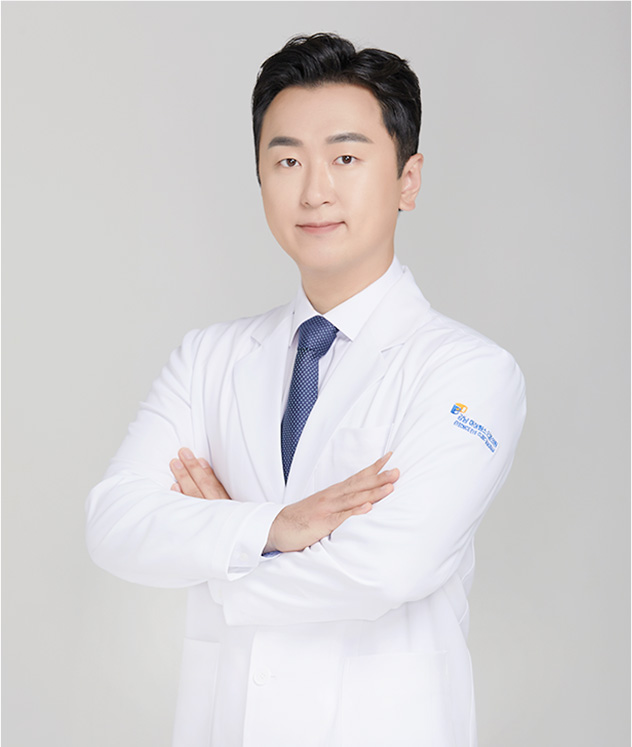
Representative Director · Former Clinical Instructor, Dept. of Ophthalmology, Samsung Seoul Hospital · Member, Korean Society of Cataract and Refractive Surgery · Member, American Society of Cataract and Refractive Surgery
International patients share what actually happened — from their first fears to waking up the next morning without glasses.
Our patients share their stories on Google — verified, public and unfiltered. Open the map to read every review straight from the source.
Tell us your prescription and travel dates. Our English-speaking team will design your personalized plan — free of charge, no pressure.
An English-speaking eye clinic in the heart of Gangnam, Seoul — moments from Sinnonhyeon Station and easily reached from Incheon International Airport.
5–6F, Duo Sinnonhyeon, 368 Sapyeong-daero, Seocho-gu, Seoul, South Korea
+82-10-6308-0984 — English, Chinese, Mongolian & Thai
Mon, Tue, Thu, Fri 09:00–18:00 · Sat 09:00–16:00 · Lunch break 13:00–14:00 · Closed Wed & Sun
By appointment only · Registration may close early depending on the day’s schedule.
Sinnonhyeon Station (Line 9 / Sinbundang Line) — 3 min walk. Gangnam Station (Line 2) nearby.