
A Korea LASEK recovery program can't make the corneal surface regrow faster. What shapes your trip is the bandage lens, the next-day check, sun and dust protection, and who you contact once you're home.
What a recovery program can and can't change
What does LASEK recovery feel like in week one?
How do I fit LASEK recovery into a Seoul trip?
What do LASEK recovery reviews get right and wrong?
Methods compared: LASEK, LASIK and SMILE
What decides the cost of a LASEK trip?
What can go wrong, and who should skip LASEK?
Your next step on WhatsApp
Worried you'll need a Korea LASEK recovery program to get through the sore first days before your flight home?
Read this before you pay for a package or lock in a return ticket.
You'll know what decides the cost, what reviews get right and wrong, how the methods differ, and how to fit week one around your leave. That should help you judge whether LASEK suits your eyes, your calendar and your budget.
Hello, I'm Dr. Baek Dong-won, Representative Director of EYEONCE Eye Clinic in Seoul.
I evaluate you, operate on you and follow your recovery myself. EYEONCE is a Seoul-government-registered clinic for international patients, with in-house interpreters in English, Chinese, Mongolian and Thai, and lifetime aftercare whose detailed terms you can confirm at consultation.
I wrote this because the word "program" makes people think healing can be bought in a shorter version, and then they book too few days.
A recovery program can't make the corneal surface regrow faster. What you can plan is the next-day check, the bandage lens, your drops, and who you contact once you're home.
If your return date is the worry, send your travel dates and your latest glasses prescription on WhatsApp, and ask which surgery day leaves room for the bandage lens before you fly.
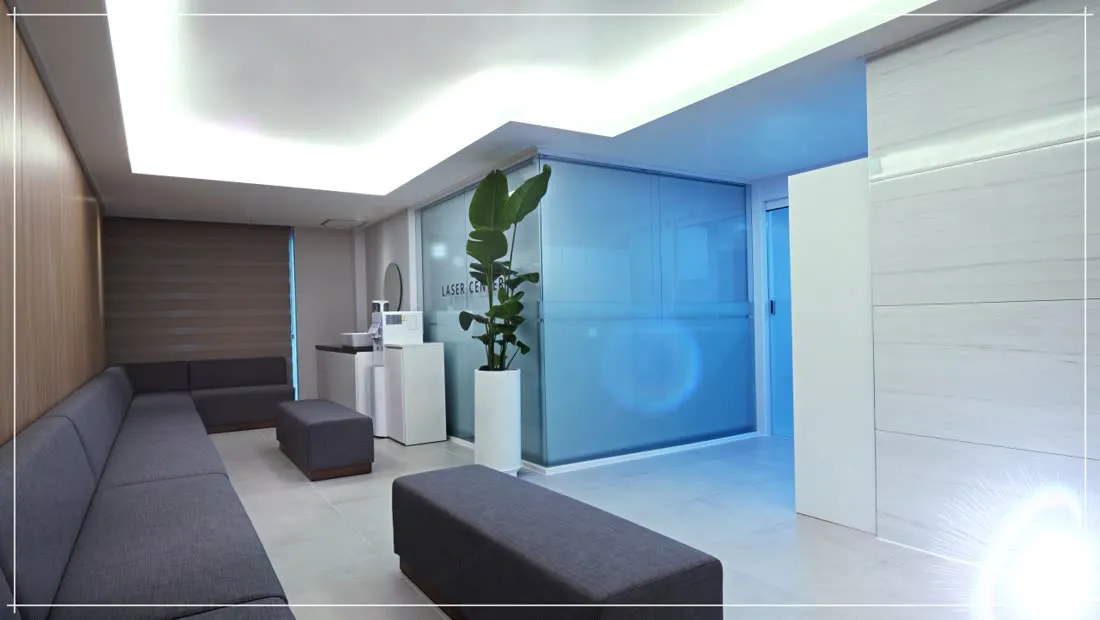
A Korea LASEK recovery program has no medical definition. People use the phrase for a room near a clinic, a packaged stay, or a set of drops and check-ups, so ask what any offer actually contains.
The healing itself follows the eye's biology. In LASEK the epithelium, the cornea's thin surface layer, is loosened and moved aside so the excimer laser can reshape the tissue beneath. A protective bandage contact lens then sits over the eye while that surface closes. The American Academy of Ophthalmology's EyeWiki entry on LASEK says the lens typically comes out on day 3 or 4, after the surface has healed.
A good hotel room can help you rest and avoid dust, smoke and rubbing your eyes. It won't move that date. For laser correction at EYEONCE, what I can point you to is the pre-op precision exam, a next-day check-up before you fly, your prescribed drops, and lifetime aftercare. We only proceed if that exam shows you're a safe candidate, and who LASEK actually suits comes down to your own measurements.
The surgery is done under anesthetic drops, so you should feel pressure rather than pain. The harder part comes later. Expect mild discomfort and light sensitivity in the first days, with vision improving gradually through week one.
The AAO's patient page on PRK, a close relative of LASEK, gives similar timing: some eye pain for 2 to 3 days, gradual improvement over 3 to 5 days, and a month or longer for vision to reach its final level. On our side, full stabilization typically comes by month one to three. Some blur during that period is expected as the cornea heals.
This is why LASEK and a tight schedule can clash. You might feel fine at a screen on day two for 10 minutes and then want to close your eyes for an hour. Plan around screens as well as flights: my guidance is to avoid them as much as you can for the first 1 to 3 months, which for a desk worker usually means shorter stretches and diligent use of artificial tears.
The question I'd ask you is what you must do on day five. If the answer is a client presentation or a long night drive, I'd want to talk about that before we talk about lasers. And if a return ticket falls before your surface has closed, I'd rather you change the ticket than hurry the eye.
For laser vision correction, including LASEK, a stay of about 3 to 5 days is typical. The exam and surgery can often be done on the same day, with a next-day check-up before you fly. EYEONCE is closed on Wednesdays and Sundays, and appointments are required, so the day of surgery shapes everything that follows.
| Surgery day | Next day | Days 3 and 4 |
|---|---|---|
| Monday | Tuesday, open | Thursday and Friday, open |
| Thursday | Friday, open | Sunday closed, Monday open |
| Friday | Saturday, open until 16:00 | Monday and Tuesday, open |
| Tuesday or Saturday | Closed | Ask about this before booking |
The table comes from our opening hours and the typical day 3 or 4 lens timing, so treat it as a way to frame your question. Your own lens date is one to confirm with us when you book.
Say you wear soft lenses, you're around -6.00 D with corneas your home clinic called thin, and you have seven days off. You might land on Sunday, having stopped your lenses early enough. Monday is the exam and, if the numbers allow it, surgery. Tuesday is the check-up, Wednesday is a quiet day with sunglasses and drops, and Thursday is the day to ask about the lens. A Friday or Saturday flight then leaves some margin, while a Wednesday flight would leave none.
If you've already bought a ticket, send a screenshot of your flight times and a photo of your contact lens box on WhatsApp, then ask whether that return date works for LASEK.
In short, these are claims you'll commonly meet in forum threads and review sites, and they're about LASEK in general.
"The first days are rough." Largely true for many people. The discomfort is real, usually short, and worth planning around.
"Your vision gets sharp the next morning." That describes flapless and flap procedures far better than LASEK. EyeWiki lists slow visual rehabilitation as a drawback of LASEK, so a blurry day two doesn't by itself mean something has gone wrong.
"You can't fly for two weeks." This often comes from general medical-tourism advice. The CDC's page mentions delaying air travel 10 to 14 days after major surgeries. For LASEK, the typical plan I described above is a stay of about 3 to 5 days, and your own date still has to fit the lens and your check-up.
"No flap means no problems." False. Avoiding a flap removes flap-related risks, while surface healing brings its own, which I cover below.
All of these are options for a different kind of eye, and your recovery follows from that choice. At EYEONCE, LASEK and LASIK are both done with the WaveLight EX500 excimer laser.
The figure that matters to you is the whole trip, and these are the things that move it:
For your own figure, ask on WhatsApp what LASEK would cost for your case, with your prescription attached. Ask which items the quote includes, so you can compare it line by line in your spreadsheet.
Common temporary effects are pain for the first days, light sensitivity, blur, and night glare or halos. Less often, there can be haze, under- or overcorrection, or infection. Sun exposure can contribute to corneal scarring, so sunglasses outdoors matter especially after LASEK. EyeWiki also notes a higher risk of persistent epithelial defect and microbial keratitis. Very rarely, the AAO says, PRK can lead to loss of vision. Healing pace differs from person to person.
As general medicine, you should usually wait or look elsewhere if any of these apply. The FDA's guidance on when LASIK isn't a fit covers similar ground for laser correction.
After you're home, foreign-body sensation or pain is the signal to act. See a local ophthalmologist first if you can't reach us in person, then contact us on WhatsApp. If anything seems wrong later on, a detailed re-examination identifies the cause and, where appropriate, we help arrange re-treatment. Before you leave Seoul, also ask for copies of your medical records, as the CDC advises, so your home doctor can see what was done.
One photo of your latest eye exam report on WhatsApp is enough to begin, along with the one question you most want answered. When you come to Seoul, I'll examine you, recommend the procedure that fits your eyes, and tell you why.
Results and suitability vary by individual. Your procedure recommendation is confirmed only through an in-person diagnostic exam.

Representative Director · Former Clinical Instructor, Dept. of Ophthalmology, Samsung Seoul Hospital · Member, Korean Society of Cataract and Refractive Surgery · Member, American Society of Cataract and Refractive Surgery
International patients share what actually happened — from their first fears to waking up the next morning without glasses.
Our patients share their stories on Google — verified, public and unfiltered. Open the map to read every review straight from the source.
Tell us your prescription and travel dates. Our English-speaking team will design your personalized plan — free of charge, no pressure.
An English-speaking eye clinic in the heart of Gangnam, Seoul — moments from Sinnonhyeon Station and easily reached from Incheon International Airport.
5–6F, Duo Sinnonhyeon, 368 Sapyeong-daero, Seocho-gu, Seoul, South Korea
+82-10-6308-0984 — English, Chinese, Mongolian & Thai
Mon, Tue, Thu, Fri 09:00–18:00 · Sat 09:00–16:00 · Lunch break 13:00–14:00 · Closed Wed & Sun
By appointment only · Registration may close early depending on the day’s schedule.
Sinnonhyeon Station (Line 9 / Sinbundang Line) — 3 min walk. Gangnam Station (Line 2) nearby.